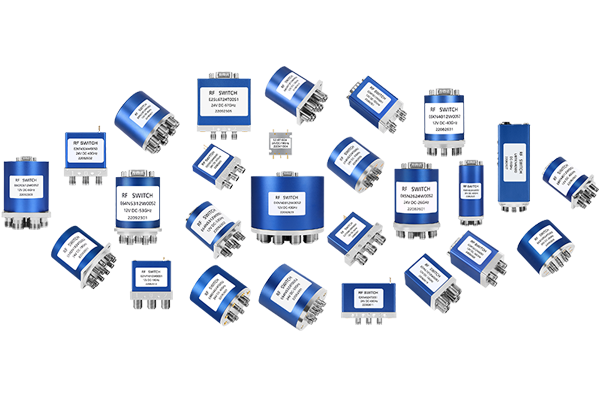
Pin diode devices are now regarded as essential parts in high-frequency circuitry given their inherent performance characteristics Their prompt switching characteristics combined with low capacitance and small insertion loss enable efficient use in switching modulation and attenuation scenarios. The essential process enabling PIN diode switching is manipulating current through the diode using a biasing voltage. That voltage alters the depletion region width in the p n junction thereby changing conductivity. Varying the bias voltage facilitates reliable high-frequency switching of PIN diodes with small distortion penalties
Precise timing and control requirements often lead to the integration of PIN diodes into intricate circuit designs They are suited to RF filtering arrangements for selective band pass and band stop operations. Their strong signal handling properties make them practical for amplifier power divider and signal generation uses. The push for compact efficient PIN diodes has led to broader use in wireless communications and radar systems
Analyzing the Performance of Coaxial Switch Designs
Developing coaxial switches is complicated and depends on careful analysis of key parameters The performance is governed by the choice of switch type frequency operation and insertion loss properties. Designs should focus on cutting insertion loss and increasing isolation to improve switch performance
Analyzing performance involves measuring important parameters like return loss insertion loss and port isolation. These values come from combined use of simulations theoretical predictions and experimental validation. Rigorous performance analysis is necessary to secure dependable coaxial switch operation
- Simulations combined with analytic methods and practical experiments are standard for coaxial switch evaluation
- Temperature, mismatched impedances and manufacturing variances often have strong effects on switch performance
- Emerging developments and novel techniques in switch design concentrate on boosting performance while minimizing footprint and energy use
Optimizing Low Noise Amplifier Architectures
Achieving high LNA performance efficiency and gain is critical for exceptional signal fidelity in many use cases It requires selecting suitable transistors setting optimal bias conditions and choosing the right topology. A robust LNA layout minimizes noise inputs while maximizing amplification with low distortion. Modeling simulation and analysis tools play a central role in evaluating the impact of design decisions on noise. The objective is achieving a low Noise Figure which measures the amplifier’s ability to preserve signal strength while suppressing internal noise
- Selecting devices that exhibit low intrinsic noise is a primary consideration
- Setting proper and optimal bias parameters is necessary to suppress noise in active devices
- Topology of the circuit strongly affects total noise performance
Techniques like impedance matching noise cancellation and feedback control can further elevate LNA performance
Wireless Path Selection via PIN Switches
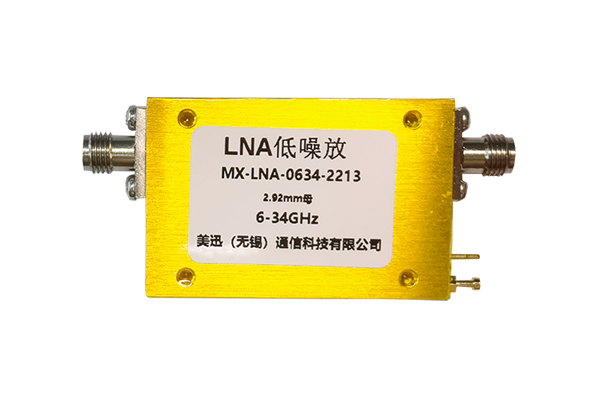
PIN diode based routing offers versatile efficient control of RF signal paths These devices switch rapidly enabling active dynamic routing of RF paths. Their minimal insertion loss and robust isolation characteristics prevent significant signal degradation. They are applied in antenna selection circuits duplexers and phased array antenna systems
Control voltages alter the diode resistance which in turn dictates switching operation. In the off deactivated or open state the diode presents a high resistance path blocking signal flow. Introducing a positive control voltage reduces resistance and opens the RF path
- Additionally PIN diode switches present fast switching low energy use and compact dimensions
Different architectures and configurations of PIN diode switch networks enable complex routing capabilities. Arranging multiple switches in networked matrices enables flexible routing and dynamic configuration
Assessing the Efficacy of Coaxial Microwave Switches
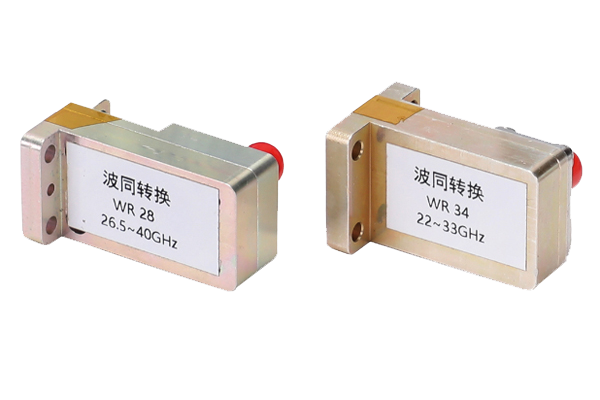
Testing and assessment of coaxial microwave switches are crucial to ensure efficient operation within systems. Several influencing factors such as insertion reflection transmission loss isolation switching speed and frequency range determine performance. Thorough evaluation entails measurement of these parameters under diverse operational environmental and testing circumstances
- Furthermore moreover additionally the evaluation should consider reliability robustness and durability plus the ability to tolerate harsh environmental stresses
- Finally the result of robust evaluation gives key valuable essential data for choosing designing and optimizing switches to meet specific requirements
Comprehensive Survey on Minimizing LNA Noise
Low noise amplifier designs are vital to RF wireless systems for amplifying weak signals and controlling noise. This survey offers an extensive examination analysis and overview of approaches to minimize LNA noise. We explore investigate and discuss key noise sources including thermal shot and flicker noise. We also examine noise matching feedback circuitry and optimal biasing strategies to mitigate noise contributions. The review emphasizes recent innovations including novel materials and architecture approaches that decrease noise figures. Through detailed coverage of noise reduction principles and techniques the article aids researchers and engineers in crafting high performance RF systems
Rapid Switching System Uses for PIN Diodes
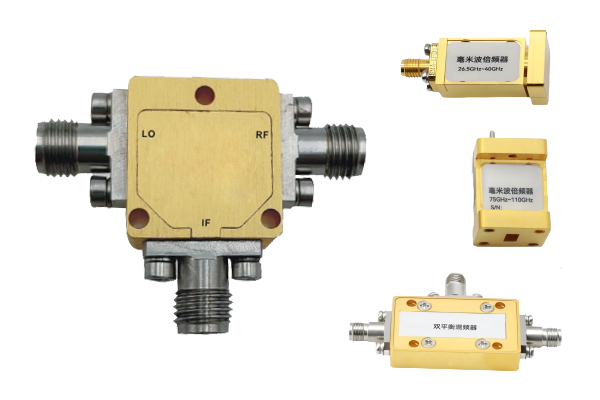
PIN diodes possess remarkable unique and exceptional traits that fit them well for high speed switching systems Reduced capacitance and low resistance yield fast switching performance suitable for strict timing control. Further PIN diodes’ proportional response to voltage facilitates exact amplitude modulation and switching control. The combination of adaptability versatility and flexibility makes them suitable applicable and appropriate across many high speed applications They find use in optical communications microwave circuitries and signal processing devices and equipment
IC Coaxial Switch and Circuit Switching Advances
IC coaxial switch technology represents a major step forward in signal routing processing and handling for electronic systems circuits and devices. Specialized ICs manage control and direct signal transmission through coaxial cables ensuring high frequency performance and minimal propagation latency. The miniaturized nature of IC technology produces compact efficient reliable and robust designs suitable for dense interfacing integration and connectivity demands
- By carefully meticulously and rigorously applying these approaches designers can realize LNAs with outstanding noise performance enabling sensitive reliable electronic systems Through careful meticulous and rigorous application of such methods engineers can design LNAs with low-noise amplifier top tier noise performance enabling dependable sensitive systems By meticulously carefully and rigorously adopting these practices designers can deliver LNAs with excellent noise performance supporting reliable sensitive systems Through careful meticulous and rigorous application of such methods engineers can design LNAs with top tier noise performance enabling dependable sensitive systems
- Applications range across telecommunications data communications and wireless networking
- Aerospace defense and industrial automation represent important application areas
- Application examples include consumer electronics audio video products and test measurement systems
Design Tips for Low Noise Amplifiers in mmWave Bands
mmWave LNA challenges include significant signal attenuation and greater sensitivity to noise sources. Parasitic elements such as capacitance and inductance dominate performance at mmWave so layout and component selection are critical. Input matching minimization and power gain maximization are critical essential and important for mmWave LNAs. Devices such as HEMTs GaAs MESFETs and InP HBTs are important selections to meet low noise figure goals at mmWave. Moreover additionally moreover the design implementation and optimization of matching networks is vital to ensure efficient power transfer and impedance match. Attention to package parasitics is crucial as they have potential to harm mmWave LNA performance. Choosing low-loss interconnects and sound ground plane designs is essential necessary and important to minimize reflections and maintain high bandwidth
Characterize and Model PIN Diodes for RF Switching Applications
PIN diodes perform as significant components elements and parts across various RF switching applications. Thorough precise and accurate characterization of these devices is essential for designing developing and optimizing reliable high performance circuits. It consists of analyzing evaluating and examining electrical voltage current characteristics including resistance impedance and conductance. The characterization includes frequency response bandwidth tuning capabilities and switching speed latency or response time
Furthermore developing precise models simulations and representations for PIN diodes is crucial essential and vital to forecast performance in complex RF systems. Various modeling approaches such as lumped element distributed element and SPICE models are used. Choosing the proper model relies on the specific application requirements and the desired required expected accuracy
State of the Art Techniques for Low Noise Amplifier Design
Designing low noise amplifiers necessitates detailed attention to topology and component choice to reach best noise figures. Emerging novel semiconductor developments have allowed innovative groundbreaking sophisticated design strategies that cut noise considerably.
Notable techniques include employing utilizing and implementing wideband matching networks incorporating low-noise transistors with high intrinsic gain and optimizing biasing schemes strategies and approaches. Further advanced packaging approaches together with thermal management methods play a vital role in minimizing external noise contributions. By meticulously carefully and rigorously adopting these practices designers can deliver LNAs with excellent noise performance supporting reliable sensitive systems